



- Rosemount Tank Gauging
- Cameron Measurement
- Siemens
- Leakwise
- Precision Digital
- Labkotec
- Enerac
- Contrec
- Berthold
- BWB Controls / Axelson
- Anderson Greenwood / AGCO
- ITT NeoDyn
- Graphic Controls
- Fluidwell
- Xylem McDonnell Miller
- PKP Process Instrumentation
- CS Instruments
- Noshok
- Hitrol
- Radioactive Services In Singapore
- Bopp & Reuther
- Chenzhu
- G&A
- Sensia Measurement
- Gefran
- Emerson Measurement Instrumentation
- Supmea
- Meister AFME
- Recorders
-
Tank Gauging System
-
Tank Gauging System
- Rosemount 5900C Radar Level Gauge
- Rosemount 5900S Radar Level Gauge
- Rosemount 5300 GWR Level Transmitters
- Rosemount 5400 Radar Level Transmitter (Obsolete)
- Rosemount 565/566 Multiple Spot or Average Temperature Sensor
- Rosemount 2240S Multi-input Temperature Transmitter
- Rosemount 2410 Tank Hub
- Rosemount 2230 Graphical Field Display
- Rosemount 2460 System Hub
- Rosemount 3051S Pressure Transmitter
- Rosemount 2120 Vibrating Fork Liquid Level Switch
- Rosemount 2130 High Temperature Level Switch SIL2
- SmartPower Solutions
- Tank Gauging System
- Tank Gauging System
- Tank Gauging System
-
Tank Gauging System
- RTG 3920 Horn Antenna Gauge
- RTG 3930 Parabolic Antenna Gauge
- RTG 3950 Still-pipe Array Antenna Gauge
- RTG 3960 LPG/LNG Gauge
- DAU 2100 Data Acquisition Unit
- RDU40 Remote Display Unit
- MST - Multiple Spot or Average Temperature Sensor
- WLS - Water Level Sensor
- FCU 2160 - Field Communication Unit
- FBM 2180 - Field Bus Modem
- AMS Trex Device Communicator
-
Tank Gauging System
- Radioactive Instruments
-
Temperature
-
Temperature
- Rosemount™ 3144P Temperature Transmitter
- Rosemount™ 644 Temperature Transmitter
- Rosemount™ 148 Temperature Transmitter
- Rosemount™ 248 Head Mount Temperature Transmitter
- Rosemount™ 214C RTD Temperature Sensor
- Rosemount™ 214C Thermocouple Sensor
- Rosemount™ 0085 Pipe Clamp Temperature Sensor
- Rosemount™ 114C Thermowell
- Temperature
- Temperature
-
Temperature
- SIEMENS SITRANS TH100 (4 to 20 mA, PT100) Temperature Transmitter
- SIEMENS SITRANS TH200 (4 to 20 mA, universal) Temperature Transmitter
- SIEMENS SITRANS TH300 (HART, UNIVERSAL) TEMPERATURE TRANSMITTER
- SIEMENS SITRANS SIEMENS SITRANS TH320/420 TEMPERATURE TRANSMITTER
- SIEMENS SITRANS TH100 Slim (Pt100) Temparature Transmitter
- Temperature
- Temperature
- Temperature
- Temperature
- Temperature
-
Temperature
- Noshok 100 Series Industrial Type Bimetal Thermometers
- Noshok 150 Series Testing and General Purpose Bimetal Thermometers
- Noshok 300 Series Bimetal Thermometers with External Reset and Sanitary connection
- Noshok 350 Series Testing and General Purpose Bimetal Thermometers with External Reset
- Noshok 300/400/600/700 Series Vapor Actuated Remote Dial Indicating Thermometers
- Temperature
- Temperature
- Temperature
- Temperature
- Temperature
- Temperature
- Temperature
- Temperature
-
Temperature
-
Pressure
- Pressure
- Precision Digital Pressure Gauges
-
Pressure
- Rosemount™ 2088 Gage and Absolute Pressure Transmitter
- Rosemount™ 2051 Coplanar™ Pressure Transmitter
- Rosemount™ 2051 In-Line Pressure Transmitter
- Rosemount™ 3051 Coplanar™ Pressure Transmitter
- Rosemount™ 3051 In-Line Pressure Transmitter
- Rosemount™ 3051S Coplanar™ Pressure Transmitter
- Rosemount™ 3051S In-Line Pressure Transmitter
- Rosemount 1199 Diaphragm Seal System
-
Pressure
- Noshok 640 Series Precision Heavy Duty Pressure Transducers
- Noshok 660 Series High Performance Micro-Size Transducers
- Noshok 621/622 Series Explosion-Proof Pressure Transmitters
- Noshok 623/624 Series Non-Incendive Pressure Transmitters
- Noshok 625/626 Series Intrinsically Safe Pressure Transmitters
- Noshok 628 Series Intrinsically Safe Hammer Union Pressure Transmitters
- Noshok 11 Series Sanitary Clamp Pressure Transmitters
- Noshok 25 Series Intelligent Pressure & Level Transmitter
- Noshok 800 Series Electronic Indicating Pressure Transmitter/Switch
- Noshok 30 Series “SNORKEL” Pressure & Level Transmitter
- oshok PT10 Series OEM Fixed Range Industrial Pressure Transmitters & Transducers
- Noshok PT20 Series General Purpose Fixed Range Transmitters & Transducers
- Noshok PT30 Series High Performance Fixed Range Transmitters & Transducers
- Noshok C10 / SC10 Digital Pressure Transmitter
- Noshok PT40 Series High Accuracy Fixed Range Transmitters & Transducers
- Noshok PT41 Series High Pressure Fixed Range Transmitters & Transducers
- Noshok PTI20 Series Intelligent Industrial Pressure Transmitters & Transducers
- Noshok PTI40 Series Premier Accuracy Intelligent Industrial Pressure Transmitters
- Noshok PTI30 Series High Accuracy Intelligent Industrial Pressure Transmitters & Transducers
- Pressure
-
Pressure
- 151P Low Differential Set Points (Explosion Proof)
- 152P Ultra Low System Pressure (Weather Proof)
- 160P Mid Range System Pressure (Weather Proof)
- 152P Ultra Low System pressure (Explosion Proof)
- 151P Low Differential Set Points (Explosion Proof)
- 160P Mid Range System Pressure (Explosion Proof)
- 162P High System Pressure (Explosion Proof)
- Pressure
-
Pressure
- SIEMENS SITRANS P200/210/220 FOR PRESSURE TRANSMITTER/ TRANSDUCER
- SIEMENS SITRANS P Compact FOR GAUGE AND ABSOLUTE PRESSURE
- SIEMENS SITRANS P300 for Gauge and Absolute Pressure
- SIEMENS SITRANS P320/420
- SIEMENS SITRANS P300 WITH PMC CONNECTION
- SIEMENS SITRANS LH300 Transmitter for Hydrostatic Level
- SIEMENS SITRANS LH100 TRANSMITTER FOR HYDROSTATIC LEVEL
- Pressure
-
Pressure
- 100P Internally Adjustable (Weather Proof)
- 101P Externally Adjustable (Weather Proof)
- 105P/105PP Minature Pressure Switch (Weather Proof)
- 110P Low Pressure Range (Weather Proof)
- 115P/115PP Built-To-Order (Weather Proof)
- 125P Higher Range Pneumatic Applications ( Weather Proof)
- 130P Adjustable Thru Port Cap-Pressure (Weather Proof)
- 131P Adjustable With Selectable Deadband-pressure (Weather Proof)
- 132P Pneumatic Or Low Impulse Hydrauic (Weather Proof)
- 142P Div 1&2 Hermetic-Ultra Low Range (Weather Proof)
- 200P Hydraulic Service-Internally Adjustable (Weather Proof)
- 201P Hydraulic Service-Externally Adjustable (Weather Proof)
- 225P High Pressure Hydraulic Applications (Weather Proof)
- 231P Adjustable Hydraulic Switch (Weather Proof)
- 232P High Pressure or High Impulse Hydraulic (Weather Proof)
- 100P Div 2/Terminal Strip (Explosion Proof)
- 100P Div 1 W/Terminal Strip ( Exposion Proof)
- 100P Div 1 & 2 hermetic (Explosion Proof)
- 110P Div 2 W/Terminal Strip- Low Range ( Explosion proof)
- 110P Div 1& 2 Hermetic- Low Range (Explosion proof)
- 112P ANSI Flanged Pessure Switch (Explosion Proof)
- 115P/115PP Build-To-Order Set Point (Explosion Proof)
- 122P CPI Pressure Switch (Explosion Proof)
- 123P Flush Welded Diaphragm (Explosion Proof)
- 125P higher Range Pneumatic Applications (Explosion Proof)
- 130P AdjustableThru Port Cap (Explosion Proof)
- 131PX Adjustable Selectable Deadband (Explosion Proof)
- 132P Universal Prssure Switch (Explosion Proof)
- 200P Div 1&2 Hermetic-hydraulic (Explosion Proof)
- 225P High Pressure hydraulic Applications (Explosion Proof)
- 231P Agjustable-Hydraulic (Explosion Proof)
- 232P High Pressure-Hydraulic (Explosion Proof)
-
Pressure
- 142P Ultra Low Vacuum (Explosion Proof)
- 142P Ultra LowVacuum (Weather Proof)
- 180P High System Pressure (Weather Proof)
- 181P Compact Vacuum Switch (Weather Proof)
- 182P Adjustabe Thru Port Cap (Weather Proof)
- 142P Ultra Low Vacuum (Explosion Proof)
- 181P Compact Vacuum (Explosion Proof)
- 182P Adjustable Thru Port Cap-Vacuum (Explosion Proof)
- Pressure
- Pressure
- Pressure
-
Pressure
- Noshok 100 Series ABS & Steel Case Dry Pressure Gauges
- Noshok 200 Series Low Pressure Diaphragm Dry Pressure Gauges
- Noshok 300 Series Brass Case Liquid Filled Pressure Gauges
- Noshok 400/500 Series All Stainless Steel Dry & Liquid Filled Pressure Gauges
- Noshok 402/502 Series All Stainless Steel Extreme High Pressure Gauges, Dry & Liquid Filled
- Noshok 600/700 Series Process Dry & Liquid Filled Pressure Gauges
- Noshok 800 Series Precision Test Pressure Gauges
- Noshok 900 Series ABS & Stainless Steel Liquid Filled Pressure Gauges
- Noshok 10 Series Fractional Sanitary Pressure Gauges
- Noshok 10 Series Heavy-Duty Sanitary Pressure Gauges
- NOSHOK PGE20 SERIES GENERAL PURPOSE DIGITAL GAUGE
-
Pressure
- Noshok 200 SERIES MECHANICAL COMPACT SPDT PRESSURE SWITCHES
- Noshok 100 SERIES MECHANICAL COMPACT SPST PRESSURE SWITCHES
- Noshok 300 Series Mechanical Compact SPDT with Adjustable Hysteresis
- Noshok 400 Series Heavy-Duty Mechanical Pressure Switch
- Noshok 800 Series Electronic Indicating Pressure Transmitter/Switch
- Pressure
- Pressure
- Pressure
- Pressure
- Pressure
- Pressure Monitor / Indicators
- Pressure
- Pressure
- Pressure
- Pressure
-
Pressure
- Noshok Type 5 – Compact Diaphragm Seal
- Noshok Type 12 – Heavy-Duty Inline Diaphragm Seal
- Noshok Type 20 – Flanged Diaphragm Seal
- Noshok Type 29 – Miniature Diaphragm Seal
- Noshok Type 30 / 30H – Flush Flanged Diaphragm Seal
- Noshok Type 30L – Low-Volume Flanged Diaphragm Seal
- Noshok Type 25/25H Standard & Elevated Pressure, Non-Replaceable Diaphragm Seals
-
Flow
-
Flow
- Paddle Type Flow Switch
- Paddle type flow switch with cable connection
- Paddle-bellows flow switch for liquids, with variable switching point
- Paddle-bellows flow meter and switch for liquids
- Flap Flowmeter and switch for low viscosity liquids
- Flap Flowmeter
- Paddle-bellows type flow switch with micro switch
-
Flow
- Flow Indicator with Wiper
- Rotor-type Flow Indicator
- Flow Indicator with Turbine
- Flow Indicator with Flanges
- Flow Indicator with Flap and Scale
- Ball type Flow Indicator
- Flow Indicator with Threaded Connection
- DG11 Flow Sight Glass with Flanged Connections
- Miniature Variable Area Flow meter and Switch
- Variable area flowmeter and switch with glass measuring tube
- Plastic Variable Area Flowmeter
- Float-Type Flow Meter For low flow volumes Compact construction
- Variable Area Flowmeter With Flange Connection, Insensitive To Viscosity Changes
- Piston Type Flow Switch for Low Flow Applications
- Flow
-
Flow
- Rosemount™ Differential Pressure Flowmeters
- Rosemount™ 1495 Orifice Plate
- Rosemount™ 1496 Orifice Flange Union
- Rosemount™ 485 Annubar™ Primary Element
- Rosemount™ 1595 Conditioning Orifice Plate
- Rosemount™ 405C Compact Conditioning Orifice Plate Primary Element
- Rosemount™ 1195 Integral Orifice Primary Element
- Rosemount 8800 Series Vortex Flow Meters
- Rosemount 8800 MultiVariable Flow Meters
- Rosemount 8705 Flanged Magnetic Flow Meter Sensors
- Rosemount 8750W Magnetic Flow Meters for Utility Water Applications
- Rosemount 8711 Wafer Magnetic Flow Meter Sensors
- Rosemount 8732E Field Mount Magnetic Flow Meter Transmitters
- Emerson Micro Motion Coriolis Flowmeters
- Cameron Turbine Flow Meter
- Cameron Ultrasonic Flow Meter - Custody Grade
- Flow
-
Flow
- SIEMENS SITRANS FM MAG 5100W Flowmeter - (Phase out and replaced by FMS500 model)
- SIEMENS SITRANS FM MAG 3100 Flowmeter - (Phase out and replaced by FMS300 model)
- SIEMENS SITRANS FM MAG 1100F Flowmeter (Phase out and replaced by FMS100 model)
- SIEMENS SITRANS FM MAG 1100 Flowmeter (Phase out & replaced by FMS100 model)
- SIEMENS SITRANS FM MAG 3100P Flowmeter (Phase out & replaced by FMS400 model)
- SIEMENS SITRANS FM MAG 5000 and 6000 Transmitter (Phase out and replaced by FMT020)
- SIEMENS SITRANS FM MAG 6000 I/6000 I Ex de Electromagnetic Flowmeter (transmitter)
- SIEMENS SITRANS FM Verificator (Verificator)
- SIEMENS SITRANS FMS500 ELECTROMAGNETIC FLOW SENSOR
- SIEMENS SITRANS FMT020 ELECTROMAGNETIC FLOW TRANSMITTER
- SIEMENS SITRANS FM TRANSMAG 2 with Sensor 911/E (Industry-specific flow system)
- SIEMENS SITRANS FM MAG 8000 (Industry-specific flow system)
- SIEMENS SITRANS FM 100 (Industry-specific flow system)
- SIEMENS SITRANS Verificator (Verificator)
- SIEMENS SITRANS FMS300 ELECTROMAGNETIC FLOW SENSOR
- SIEMENS SITRANS FMS100 ELECTROMAGNETIC FLOW SENSOR
- SIEMENS SITRANS FMS400 ELECTROMAGNETIC FLOW SENSOR
- Flow
-
Flow
- SIEMENS SITRANS FCS100 CORIOLIS/DENSITY FLOWMETER (SENSOR)
- SIEMENS SITRANS FCS500 CORIOLIS/DENSITY FLOWMETER (SENSOR)
- SIEMENS SITRANS FCS600 CORIOLIS/DENSITY FLOWMETER (SENSOR)
- SIEMENS SITRANS FCS700 CORIOLIS/DENSITY FLOWMETER (SENSOR)
- SIEMENS SITRANS FCT020 CORIOLIS/DENSITY FLOWMETER (TRANSMITTER)
- SIEMENS SITRANS FCT040 CORIOLIS/DENSITY FLOWMETER (TRANSMITTER)
- SIEMENS SITRANS FC120/140 CORIOLIS/DENSITY FLOWMETER (Multiparameter Flowmeter System)
- SIEMENS SITRANS FC520/540 CORIOLIS/DENSITY FLOWMETER (Multiparameter Flowmeter System)
- SIEMENS SITRANS FC620/FC640 CORIOLIS/DENSITY FLOWMETER (Multiparameter Flowmeter System)
- SIEMENS SITRANS FC720/FC740 CORIOLIS/DENSITY FLOWMETER (Multiparameter Flowmeter System)
-
Flow
- Liquid Flow Switches
- General Purpose Liquid Flow Switches FS 251 and FS 254
- FS 4-3T General Purpose Liquid Flow Switches
- FS 4-3 General Purpose Liquid Flow Switches
- FS 6-W High Sensitivity Liquid Flow Switches
- FS 1-W High Sensitivity Liquid Flow Switches
- FS 5 General Purpose Liquid Flow Switches
- FS 6 High Sensitivity Liquid Flow Switches
- FS 7-4E General Purpose Liquid Flow Switches
- FS 7-4 Industrial Liquid Flow Switches
- FS 7-4W Industrial Liquid Flow Switches
- FS 8-W Industrial Liquid Flow Switches
- Flow
- SIEMENS SITRANS DP Flow Transmitter
- Flow
- Flow
-
Flow
- Low Water Cut off- Mechanical for Steam Boiler
- RB-122-E-Low Water Cut-Off
- RB-24E-Low Water Cut-Off
- RBT-3000 LWCO and Fuel Economizer
- RS-1-HP High Pressure Remote Sensor
- RS-1-LP Low Pressure Remote Sensor
- Series 21/221 Make-Up Water Feeders
- Series 25-A Make-Up Water Feeder
- Series 27-W Valve
- Series 47-2/247-2 Mechanical Water Feeder/LWCO
- Series 42S LWCO/Pump Controllers
- Series 47/247 Water Feeders
- Series 51/51-2 Mechanical Water Feeders/ LWCO
- Series 53/53-2 Mechanical Water Feeders/ LWCO
- Flow
- Cameron Flow Analysers
- Cameron ITT Barton Flow Meter - Positive Displacement (PD) / Rotary Piston
- Cameron Flow Meter - Differential Pressure (DP) Cone
- Cameron Flow Element - Orifice Plates & Flanges, Senior Orifice, Meter Run
- Flow
- Flow
- Flow
- Flow
- Flow
- Averaging Pitot Tube
- Flow
- Restriction Orifice
- Flow
- Flow
- Wedge Meter
- Flow
- Rota Meters
- Cavitating Venturi
- Steam Ejector
- Cameron Flow Meter - Floco PD Meter
- Cameron Coriolis Flow Meter
- Thermal Mass Transmitter
- Paddle Switches
-
Flow
- VA 500 Thermal Mass Flow Meter
- VA 520 thermal mass flow meter
- VA 550 thermal mass flow meter
- VA 570 thermal mass flow meter
- VA 521 - Compact Inline flow meter for compressed air and other gas types
- VA 525 - Compact Inline flow meter for compressed air and nitrogen
- VD 500 - Flow sensor for wet compressed air
- VU 570 - Vortex ultrasonic sensor for flow measurement
- VX 570 - Vortex sensor for flow measurement
- M-Bus - Industrial gas meter
- PI 500 - Portable Flow Meters
- DS 400 - Flow measurement for compressed air and gases
- VA 409 Flow direction switch for compressed air systems
- DS 500 - Intelligent chart recorder for compressed air and gases
- VD 520 - Inline Differential Pressure Flow Sensor
- VA 526 – Compact flow sensor for compressed air and gases
- Flow
- Bopp and Reuther coriolis flow meter
- Flow
- Flow
- Flow
-
Flow
- E018 Explosion proof-Flow rate/totalizer with HART Communication
- E110 Flow rate indicator / totalizer with analog and pulse signal outputs
- E112 Flow rate indicator / totalizer with linearization, analog and pulse outputs
- E115 Explosion-Proof Bi-directional Flow rate Indicator / Totalizer
- E119 Explosion proof - Totalizer with receipt printer driver
- E126-EL Explosion proof - Flow Computer for liquids
- E126-EG Explosion proof - Multi-Purpose Indicator
-
Flow
- D010 DIN Panel mount - Flow rate Indicator
- D011 DIN Panel mount - Totalizer with resettable total & non-resettable accumulated total
- D012 DIN Panel mount - Flow rate Indicator / Totalizer displays flow rate & total simultaneously
- D016 DIN Panel mount - Flow rate Indicator / Totalizer with linearization and pulse signal output
- D013 DIN Panel mount - Flow rate Monitor / Totalizer with high / low alarm output
- D014 DIN Panel mount - Flow rate Indicator / Totalizer with pulse signal output
-
Flow
- F010 SA / IS - Flow rate Indicator with very large digits
- F011 SA / IS - Totalizer w/ resettable total & non-resettable acc. total
- F012 SA / IS - Flow rate Indicator / Totalizer displays flow rate and total simultaneously
- F013 SA / IS - Flow rate Monitor / Totalizer w/ one high/low alarm output
- F014 SA / IS - Flow rate Indicator / Totalizer with pulse output
- F016 SA / IS - Flow rate Indicator / Totalizer with linearization and pulse output
- F018 SA / IS - FR Indicator / Totalizer w/ linearization, pulse/alarm & analog outputs & HART Comm
- F103 WP - Flow Logger / Totalizer with linearization, analog and pulse outputs
- F110 SA / IS - FR Indicator / Totalizer, analog and pulse outputs with Modbus comm
- F111 SA / IS - Dual input Flow rate Indicator / Totalizer with two pulse outputs
- F112 SA / IS - Flow rate Indicator / Totalizer with linearization, Modbus, analog and pulse outputs
- F113 SA / IS - Flow rate Indicator / Totalizer with with high / low alarms, analog and pulse outputs
- F114 SA / IS - Ratio Monitor / Totalizer with high / low alarms and analog outputs
- F115 SA / IS - Bi-directional FR Indicator / Totalizer w/ analog, pulse signal & flow direction output
- F116 SA / IS - Differential / Sum Flow Computer w/ Modbus Comm, analog & pulse outputs
- F118 SA / IS - FR Monitor / Totalizer w/ linearization, high / low alarms, analog & pulse outputs
- F119 - FR Indicator / Totalizer w/ receipt printer driver linearization, analog & pulse outputs
- F126-EL SA / IS - Flow Computer for liquid with temperature compensation for corrected volume
- F126-EG SA / IS - Flow Computer for gas with temp. & pressure compensation for corrected vol.
- F127 SA / IS - Differential Flow Computer for liq. w/ temp. compensation for corrected vol.
- Flow
- Flow
- Flow
- Flow
- Flow
- Flow
- Flow
- Flow
- Flow
- Flow
- Flow
- Flow
- Flow
- Flow
- Flow
- Supmea Coriolis Mass Flowmeter
- Flow
- Oval Wheel Meter
-
Flow
-
Level
- Labkotec WBS 3000 Water Bottom Level Sensors
- LabkoNet Tank Inventory Management System
-
Level
- Rosemount™ 2051L Level Transmitter
- Rosemount™ 3051L Level Transmitter
- Rosemount™ 3051S MultiVariable™ Transmitter
- Rosemount™ 3051SAL Level Transmitter
- Rosemount™ 3051SAM Scalable ERS Measurement Transmitter
- Rosemount™ 3051S Electronic Remote Sensor (ERS)™ System
- Rosemount™ 3300 Level Transmitter - Guided Wave Radar
- Rosemount™ 5300 Level Transmitter - Guided Wave Radar
- Rosemount™ 3308 Wireless Level Transmitter - Guided Wave Radar
- Rosemount™ 3408 Level Transmitter - Non-Contacting Radar
- Rosemount™ 5408 Level Transmitter - Non-Contacting Radar
- Rosemount™ 2120 Level Switch - Vibrating Fork
- Rosemount™ 2130 Level Switch - Vibrating Fork
- Rosemount™ 2140 Level Detector - Vibrating Fork
- Rosemount™ 2160 Wireless Level Detector - Vibrating Fork
- Level
-
Level
- SIEMENS SITRANS LR100 RADAR LEVEL TRANSMITTER
- SIEMENS SITRANS LR110 RADAR LEVEL TRANSMITTER
- SIEMENS SITRANS LR120 RADAR LEVEL TRANSMITTER
- SIEMENS SITRANS LR140 RADAR LEVEL TRANSMITTER
- SIEMENS SITRANS LR150 RADAR LEVEL TRANSMITTER
- SIEMENS SITRANS LR510 RADAR LEVEL TRANSMITTER
- SIEMENS SITRANS LR530 RADAR LEVEL TRANSMITTER
- SIEMENS SITRANS LR550 RADAR LEVEL TRANSMITTER
- SIEMENS SITRANS LR580 RADAR LEVEL TRANSMITTER
- Level
- Level
- Level
- Level
- Radar
- Float Switches
- Capacitance
- Displacer
- Float Transmitters
- Capacitance Switches
- Capacitance Transmitters
- Radio Frequency
- Vibration Switches
- Electrode Switches
- Paddle Switches
- Tilt Switches
- Tank Level
- Level
- Level
- Level
- Level
-
Level
- F070 Safe area / Intrinsically safe - Level Indicator with very large digits
- F073 Safe area / Intrinsically safe - Level Monitor with one high / low alarm output
- F074 Safe area / Intrinsically safe - Level / Pump Controller with one control output
- F077 Safe area / Intrinsically safe - Level Monitor with linearization & one high / low alarm output
- F170 Safe area / Intrinsically safe - Level Monitor with with high / low alarms and analog outputs
- F173 Safe area / Intrinsically safe - Level Monitor with linearization, high / low alarms and analog outputs
- Level
- Level
- Continuous Level Measurement
- Multiphase / Interface Measurement
- Level Switch Measurement
- Mould Level Measurement
- Level
-
Level
- Displacer Type — HM-30 & 90 Series
- Electrode Type — HE-Series
- Float Type — HR-66 Series
- Capacitance Type — HCC/HPC-95R Series
- Capacitance Type — HCC/HPC-95P Series
- Capacitance Type — HCC-95T Series
- Electrode Type — HE-1S Series
- Float Type — HR-95 Series
- Float Type — HQM-77 Series
- Float Type — HR-50 Series
- Float Type — HM-90S Series
- Float Type — HM-12(10) Series
- Float Type — CS-1000
- Magnetic Float Type — HR-10 Series
- Magnetic Float Type — HR-10L Serie
- Paddle Type — HLV-Series
- Magnetic Float Type — HR-30 Series
- Pressure — HP-1A
- Thermal Mass Type — HTML-S Series
- Radio Frequency Type — HPC-96RF Series
-
Level
- Capacitance Type — HT/HPC-100CT Series
- Float Type — HT-100F Series
- Magnetic Float — HT-100R Series
- Magnetostrictive Type — HT-100M Series
- Pressure Type — HT-100P Series
- Thermal Mass Type — HTML-TM Series
- Ultrasonic Type — HUL/HUT-2000S Series
- Capacitance Type — HT/HPC-100CT-2 Series
- Thermal Mass Type — HTML-TC Series
- Ultrasonic Type — HUL/HUT-2000T&S Series
- Ultrasonic Type — HUL-2000N Series
- Level
- Level
- Level
- Level
-
Level
- SET-1000 Control unit
- SET-2000 Control unit
- Lokaset 20 Cesspool alarm
- SET/OELO2 Sensor (Leak Detection)
- SET/OSK2 Sensor (Oil-on-water Detection)
- SET/OS2 Sensor (Oil/Water Interface Detection)
- SET/TSHS2 Sensor (For Viscous Liquids)
- SET/TSH2 Sensor (For Non-Viscous Liquids)
- SET/TSSH2 Sensor (For High Temperature Non-Viscous Liquids)
- SET/TSSHS2 Sensor (For High Temperature Viscous Liquids)
- Level
- Oil-On-Water Analyser/Leak Detection
-
Panel / Process Meters
- Batch Controllers / Loading Computer
- Panel / Process Meters
- Cameron Flow Rate / Totalisers
- Flow Rate / Totalisers
- Cameron Flow Computers
- Precision Digital Indicators
- Panel / Process Meters
- Panel / Process Meters
- Precision Digital Flow rate/Totalizer
- Panel / Process Meters
- Panel / Process Meters
- Digital Panel Meters
- Panel / Process Meters
-
Panel / Process Meters
- PD6100 ProVu Strain Gauge, Load Cell & mV Digital Panel Meter
- PD6200 ProVu Analog Input Flow Rate/Totalizer
- PD6262 ProVu Dual Analog Input Flow Rate/Totalizer
- PD6300 ProVu Pulse Input Flow Rate/Totalizer
- PD6363 ProVu Dual Pulse Input Flow Rate/Totalizer
- PD6000 ProVu Process Meter
- PD6001 - ProVu Feet & Inches Level Meter
- PD6400 ProVu True RMS High Voltage & Current Digital Panel Meter
-
Panel / Process Meters
- PD6600 Loop Leader Loop-Powered Process Meter
- PD6600 Loop Leader Loop-Powered Intrinsically Safe & Nonincendive Process Meter
- PD6620 Loop Leader Loop-Powered Rate/Totalizer
- PD6620 Loop Leader Loop-Powered Intrinsically Safe & Nonincendive Rate/Totalizer
- PD685 Intrinsically Safe Type 4X, IP67 Loop-Powered Meter
- PD662 Survivor NEMA 4X Loop-Powered Process Meter
- Sabre Series
- Panel / Process Meters
-
Inst Valves - Manifolds
- Inst Valves - Manifolds
- Inst Valves - Manifolds
-
Inst Valves - Manifolds
- Noshok 100 Series – Mini Needle Valve (Hard Seat)
- Noshok 150 Series – Mini Needle Valve (Soft Tip)
- Noshok 200 Series – Multiport Needle Valve (Hard Seat)
- Noshok 300 Series – Multiport Needle Valve (Soft Seat)
- Noshok 400 Series – Standard Needle Valve (Hard Seat)
- Noshok 500 Series – Standard Needle Valve (Soft Seat)
- Noshok 600 Series – Block & Bleed Needle Valve (Hard Seat)
- Noshok 700 Series – Block & Bleed Needle Valve (Soft Seat)
- Noshok 800/850 Series – Bleed Valve (Hard Seat & Soft Tip)
- Noshok 2070 Series – 2-Valve Block & Bleed Needle Valve (Hard Seat)
- Noshok 2170 Series – 2-Valve Block & Bleed Needle Valve (Soft Seat)
- Noshok 3070 Series – 3-Valve Double Block & Bleed Needle Valve (Hard Seat)
- Inst Valves - Manifolds
- Inst Valves - Manifolds
- Liquid Level Manifold
- Inst Valves - Manifolds
- Inst Valves - Manifolds
- Inst Valves - Manifolds
-
Inst Valves - Manifolds
- Noshok 2000 / 2100 Series – 2-Valve Static Pressure Block & Bleed
- Noshok 2020 / 2120 Series – 2-Valve Liquid Level Manifold
- Noshok 200002/210002 & 200402/210402 Series – 2-Valve Narrow Block & Bleed Manifolds
- Noshok 2530 Series – 2-Valve Natural Gas Manifold (Large Bore)
- Noshok 2602 / 2702 Series – 2-Valve Mini Block & Bleed Manifolds
- Noshok 2603/2703 & 2604/2704 Series – 2-Valve Block & Bleed Manifolds (0.156
- Noshok 2180 Series – Chart Recorder Manifold Valve
- Inst Valves - Manifolds
-
Inst Valves - Manifolds
- Noshok 3010 / 3110 Series – 3-Valve Differential Pressure Manifold (Hard & Soft Seat)
- Noshok 3040 Series – Compact 3-Valve Differential Manifold (Hard Seat)
- Noshok 3510 Series – 3-Valve Differential Manifold (Soft Seat, 0.375” Orifice)
- Noshok 3610 / 3710 Series – Mini 3-Valve Differential Manifold (Hard Seat & Soft Tip, 0.141
- Inst Valves - Manifolds
- Truck Register
-
Enclosures and Accessories
-
Enclosures and Accessories
- CONTREC S1200BATL - Lithium Batteries
- CONTREC IP67 Enclosure - Aluminium Enclosure
- CONTREC IP66 Weatherproof Enclosure - Field Mounting Enclosure
- CONTREC IP65 Stainless Steel (Custom)
- CONTREC PR-00 Thermal Panel Printer
- CONTREC PR-01 Panel Mount Impact
- CONTREC PR-02 Desktop 24VDC or 240VAC – 42 Col. Slip Printer
- CONTREC PR-03 Desktop 240VAC 80 Col. – Continuous Paper Printer
- CONTREC PR-04 Thermal Ticket Printer
-
Enclosures and Accessories
- Density
- Concentration & Bulk Flow Measurement
- Digital Panel Meters
- Process Controlling & Protection
- Valve Positioners
-
Analysers
- Gas Detectors
-
Analysers
- Rosemount™ 56 Dual Channel Transmitter
- Rosemount™ 1056 Intelligent Four-Wire Transmitter
- Rosemount™ 1066 Single Channel Transmitter
- Rosemount™ 5081 Explosion-proof Transmitter
- Rosemount™ 3900 General Purpose pH/ORP Sensor
- Rosemount™ 389 General Purpose pH/ORP Sensor
- Rosemount™ 400 Contacting Conductivity Sensor
- Rosemount™ 228 Toroidal Conductivity Sensor
- Rosemount™ 499ACL Chlorine Sensor
- Rosemount™ 499ADO Dissolved Oxygen Sensor
- Rosemount™ 499ATrDO Trace Dissolved Oxygen Sensor
- Rosemount™ T56 Clarity™ II Turbidimeter
- Rosemount™ T1056 Clarity™ II Turbidimeter
- Rosemount™ 396 pH/ORP Sensor
- Analysers
- Cameron Nuflo Water Cut Analyser
-
Analysers
- MDA-U2-PH pH ORP Meter
- MDA-PH pH ORP Meter
- MDC-P2 Dual Channel Universal Controller
- MDC-P1 Single Channel Universal Controller
- SUP-PH5019 Plastic pH Sensor
- SUP-PH5022 Germany Glass pH Sensor
- SUP-PH5014 Hydrofluoric Acid pH Sensor
- SUP-PH5013A PTFE pH Sensor for Corrosive Medium
- Standard pH Calibration Solutions
- pH Installation Accessories
- SUP-PH5018 Glass pH Sensor
- SUP-PH-5015 Glass pH Sensor
- Analysers
- Supmea Oxygen Sensor and Meter
- Analysers
- Analysers
- Analysers
- Analysers
- Signal Generators & Calibrators
- 4-20mA Set-Point Generator
-
Large Display Field Mount Indicators
-
Large Display Field Mount Indicators
- PD2-6000 Helios Process Meter
- PD2-6080 Helios Modbus Scanner with Dual Analog Inputs
- PD2-6001 Helios Feet & Inches Level Meter
- PD2-6081 Helios Feet & Inches Modbus Scanner with Dual Analog Inputs
- PD2-6060 Helios Dual Analog Input Process Meter
- PD2-6100 Helios Strain Gauge, Load Cell & mV Meter
- PD2-6200 Helios Analog Input Flow Rate/Totalizer
- PD2-6210 Helios Analog Input Batch Controller
- PD2-6262 Helios Dual Analog Input Flow Rate/Totalizer
- PD2-6300 Helios Pulse Input Flow Rate/Totalizer
- PD2-6310 Helios Pulse Input Batch Controller
- PD2-6363 Helios Dual Pulse Input Flow Rate/Totalizer
- PD2-6400 Helios High Voltage & Current Meter
- PD2-7000 Helios Temperature Meter
- PD4-6600 Loop Leader+ Large Display Loop-Powered Process Meter
- PD4-6600 Loop Leader+ Large Display Loop-Powered Intrinsically Safe Process Meter
- PD4-6620 Loop Leader+ Large Display Loop-Powered Flow Rate/Totalizer
- PD4-6620 Loop Leader+ Large Display Loop-Powered Intrinsically Safe Flow Rate/Totalizer
-
Large Display Field Mount Indicators
- PD6730X Vantageview NEMA 4X Modbus Scanner
- PD6928-GP VantageView+ NEMA 4X Loop-Powered Flow Rate/Totalizers
- PD6700 Vantageview NEMA 4X Loop-Powered Process & Level Meter (Obsolete)
- PD6900-GP VantageView+ NEMA 4X Loop-Powered Process/Feet & Inches Level Indicators
- PD6770 Vantageview NEMA 4X Large Display Loop-Powered Meter
- PD6938-GP VantageView+ NEMA 4X Pulse Input Flow Rate/Totalizer
- PD6730 Vantageview NEMA 4X Pulse Input Rate/Totalizer
-
Large Display Field Mount Indicators
- Control Stations
- Lithium Battery
- Dosimeter
- Calibrator
-
Flame and Gas Detector
-
Flame and Gas Detector
- Net Safety™ Millennium II Single Channel Transmitter
- Net Safety™ Millennium II Dual Channel Transmitter
- Net Safety™ Millennium II SC310 Catalytic Bead Combustible Gas Sensor
- Net Safety™ Millennium II SC311 Infrared Combustible Gas Sensors
- Net Safety™ Millennium II ST3 XChem Toxic Gas Sensor [Electrochemical]
- Rosemount™ 925 Fixed Gas Detection Transmitter
- Rosemount™ 925FGD Fixed Gas Detector
- Rosemount™ 935 Open Path Combustible Gas Detector
- Rosemount™ 936 Open Path Toxic Gas Detector
- Rosemount™ Incus Ultrasonic Gas Leak Detector
- Flame and Gas Detector
- Flame and Gas Detector
- Flame and Gas Detector
- Flame and Gas Detector
- Flame and Gas Detector
-
Flame and Gas Detector
- Btu Meter / Heat Calculator
-
DEW POINT
-
DEW POINT
- FA 510/515 - Dew Point Sensor for Refrigeration Dryers
- FA 500 - Dew point sensor with integrated display and alarm relay
- FA 515 Ex- Dew Point Sensor
- FA 505 - Dew Point Sensor for OEM Applications
- DP 500 - Portable dew point meter with integrated data logger
- FA 510/515 - Dew point sensor for adsorption dryers
- FA 550 - Dew point sensor in robust die-cast aluminum housing
- DP 510 - Portable dew point meter with third party sensor
- DP 400 mobile - Mobile Dew Point Measurement with Pressure Sensor
- DS 52 - Dew point measurement set for desiccant dryers
- DS 52 - Dew point measurement set for refrigeration dryers
- DS 400 Set - Stationary dew point measurement in compressed air systems
- DS 400 - Dew point set for monitoring of medical compressed air
- IAC 500 sensor for measuring ambient condition
- FO 510 - Industrial oil moisture sensor
-
DEW POINT
- Standard Measuring Chamber
- High-pressure measuring chamber up to 350 bar
- Measuring chamber for granulate dryers and gases
- Measuring chamber for atmospheric dew point
- Control and calibration set for dew point sensors
- Bypass measuring chamber up to 350 bar
- Stainless steel measuring chamber for compressed air up to 50 bar
-
DEW POINT
-
COMPRESSED AIR QUALITY
-
COMPRESSED AIR QUALITY
- Residual Oil Content Measurement OILCHECK according to ISO 8573 - Stationary Solutions
- Residual Oil Content Measurement OILCHECK according to ISO 8573 - Mobile Solution
- Particle Counter PC 400 - Stationary Ssolution according to ISO 8573
- Particle Counter PC 400 - Mobile Solution according to ISO 8573
-
COMPRESSED AIR QUALITY
- Power Meter
- Leak Detection
- Softwares
- Power Meter
-
PRESSURE SENSORS
-
PRESSURE SENSORS
- Digital Pressure Sensor DPS 16
- PTS 500 - for Measuring of Pressure and Temperature
- IAC 500 Sensor for Measuring Ambient Conditions
- Standard Pressure Sensor CS10 and CS16
- Differential Pressure Probe to Test Filter Performance
- Standard Pressure Sensor CS40
- Standard Pressure Sensor CS1.6 Absolute
- Standard Pressure Sensor CS100
- Standard pressure sensor CS250
- Standard pressure sensor CS400
- Precision Pressure Sensor CS -1...+15
-
PRESSURE SENSORS
-
Batch Controller
- Batch Controller
- Batch Controller
- Batch Controller
-
Batch Controller
- F030 SA / IS - Batch Controller with one control output
- F130 SA / IS - Batch Controller with two-stage control, pulse output and Modbus communication
- F131 SA / IS - Batch Controller with two-stage control, pulse output and analog output in relation to the flow rate
- F132 SA / IS - Batch Controller with with two-stage control and receipt printer driver
- F133 SA / IS - Delivery Controller / Dispenser with pump start and valve control
-
Batch Controller
- N410 DIN Panel mount Controller with numerical keypad, remote control inputs and 3 control / alarm / pulse outputs
- N413 DIN Panel mount - Batch Controller with receipt printer driver and numerical keypad
- N414 DIN Panel mount - Legal-for-trade Batch Controller with NTEP Certification and receipt printer driver
-
Batch Controller
- Contrec 515 – AC01 – Additive Controller for Volumetric Frequency Flowmeters
- Contrec 515 – BA01 – Batch Additive Controller
- Contrec 515 – CB01 – Frequency Input Blending Controller - Frequency Flow, DCV Control
- Contrec 515 – CB02 – Frequency Input Secure Blending Controller - DCV Control
- Contrec 515 – TA02 – Dual Channel On-Truck Additive Batch Controller
-
Batch Controller
- Contrec 114D – Frequency/Pulse Input Batch Controller
- Contrec 214D – Pulse/Frequency Input ATEX/IECEx Batch Controller
- Contrec 424 – Batch Controller
- Contrec 430D – Frequency Input, Numeric Keyboard Batch Controller
- CONTREC 515 – BF01 – Frequency Input Batch Controller, Tailored for Volumetric Flow Meters
- CONTREC 515 – BF02 – Analogue Input Batch Controller, Tailored for Volumetric Flow Meters
- CONTREC 515 – BF03 – Frequency Input Batch Controller, Tailored for Mass Flow Meters
- CONTREC 515 – BF04 – Analogue Input Batch Controller, Tailored for Mass Flow Meters
- CONTREC 515 – BS01 – Secure Access Batch Controller, Tailored for Inputs from Vol. Flow Meters
- CONTREC 515 – BS03 – Secure Dual Stage Batch Controller
- CONTREC 515 – BT01 – Secure Dual Stage Batch Controller
- CONTREC 515 – LK01 – Leak Monitor
-
Batch Controller
- CONTREC 515 – BR01 – Frequency Input Batch/Ratio Controller, Tailored for Vol. Flow Meters
- CONTREC 515 – BR02 – Analogue Input Batch/Ratio Controller for Vol. Flow Meters
- CONTREC 515 – BR03 – Frequency Input Batch/Ratio Controller, Tailored for Mass Flow Meters,
- CONTREC 515 – BR04 – Analogue Input Batch/Ratio Controller, Tailored for Mass Flow Meters
- CONTREC 515 – CR02 – Analogue Input Batch Ratio Controller
- Batch Controller
- Batch Controller
-
Multi-Purpose Indicators
- Multi-Purpose Indicators
- Multi-Purpose Indicators
-
Multi-Purpose Indicators
- F090 SA / IS - Multi-Purpose Indicator input loop powered with very large digits
- F490 SA / IS - Loop Powered, Multi-Purpose Indicator for universal applications
- F093 SA / IS - Tachometer Monitor displays engine speed and running hours with alarm output
- F190 SA / IS - Multi-Purpose Monitor with alarm outputs and configurable hysteresis
- Process Monitor
- Production and LACT Sampling
-
Flow Computers
- Flow Computers
- Flow Computers
- Flow Computers
-
Flow Computers
- CONTREC 515 – PP01 – Pressurised Petroleum Flow Computer
- CONTREC 515 – FA02 – Add/Subtract Flow Computer - 2 Channel Input (Mass) Flow Computer
- CONTREC 515 – FA03 – Add/Subtract Flow Computer - 2 Channel Input (Energy)
- CONTREC 515 – FN01 – Frequency Input Net Oil Flow Computer, Tailored for Mass Flow Meters
- CONTREC 515 – FA01 – Add/Subtract Flow Computer - 2 Channel Input (Volume)
- CONTREC 425 Flow Computer
-
Flow Computers
- CONTREC 515 – GN01 – Frequency Input Natural Gas Flow Computer
- CONTREC 515 – GN02 – Analogue Input Natural Gas Flow Computer
- CONTREC 515 – GN03 – Natural Gas Flow Computer(AGA - 8) - DP Meter (Mass Span)
- CONTREC 515 – GN04 – Natural Gas Flow Computer (AGA - 8) - DP Meter (ISO/Cone)
- CONTREC 515 – GN05 – Natural Gas Flow Computer (AGA - 8) - DP Meter (AGA - 3)
- CONTREC 515 – GN06 – Natural Gas Flow Computer (AGA - 8) - DP Meter (Volumetric Span)
- CONTREC 515 – GN11 – Natural Gas Flow Computer (SGERG) - Quadrature Input
- CONTREC 515 – GN12 – Natural Gas Flow Computer (SGERG) - Analogue Flow
- CONTREC 515 – GN13 – Natural Gas Flow Computer (SGERG) - DP Meter (Mass Span)
- CONTREC 515 – GN14 – Natural Gas Flow Computer (SGERG) - DP Meter (ISO/Cone)
- CONTREC 515 – GN16 – Natural Gas Flow Computer (SGERG) - DP Meter (Volumetric Span)
- CONTREC 515 – DG01 – Density Converter (Gas)
- CONTREC 515 – DG02 – Density Converter
- CONTREC 515 – GC01 – Ideal Gas Computer - Quadrature Input
- CONTREC 515 – GC02 – Ideal Gas Computer - Analogue Flow
- CONTREC 515 – GC03 – Ideal Gas Computer - DP Meter (Meter Span)
- CONTREC 515 – GC04 – Ideal Gas Computer - DP Meter (ISO/Cone)
- CONTREC 515 – GC06 – Ideal Gas Computer - DP Meter (Volumetric Span)
-
Flow Computers
- CONTREC 515 – HC01 – Heat Calculator - Frequency Flow (Volume)
- CONTREC 515 – HC02 – Heat Calculator - Analogue Flow (Volume)
- CONTREC 515 – HC03 – Heat Calculator - DP Meter (Mass Span)
- CONTREC 515 – HC04 – Heat Calculator for stacked DP meters (ISO 5167 and V-Cones)
- CONTREC 515 – HC06 – Heat Calculator - DP Meter (Volumetric Span)
- CONTREC 515 – HC12 – Heat Calculator - Heat Calculator - Analogue Flow (Mass)
- CONTREC 212 – Heat Calculator
-
Flow Computers
- CONTREC 515 – SC01 – Frequency Input Steam Computer
- CONTREC 515 – SC02 – Analogue Input Steam Computer
- CONTREC 515 – SC03 – Steam Flow Computer
- CONTREC 515 – SC04 – Steam Computer - DP Meter (ISO/Cone)
- CONTREC 515 – SC05 – Steam Computer - DP Meter (AGA - 3)
- CONTREC 515 – SC06 – Steam Computer - DP Meter (Volumetric)
- CONTREC 515 – CS02 – Condensate and Steam Flow Computer
- CONTREC 515 – CS12 – Condensate and Steam Flow Computer
- Flow Computers
- Flow Computers
- Blending System
- Metering System
- SAMPLING
- Turbine Flow Electronics
- Ultrasonic Flow Meters
-
JISKOOT Sampling Product - Custody Transfer and Fiscal Sampling
- JISKOOT Sampling Product - Custody Transfer and Fiscal Sampling
- JISKOOT Sampling Product - Custody Transfer and Fiscal Sampling
-
JISKOOT Sampling Product - Custody Transfer and Fiscal Sampling
- JISKOOT 210SD Severe Duty Cell Sampler
- JISKOOT 210P & 210P-HP Pneumatic Hydrocarbon Cell Sampler
- JISKOOT 210EH & 210EH-HP Hydraulic Hydrocarbon Cell Sampler
- JISKOOT 210HT High Temperature Cell Sample
- JISKOOT 210 Hybrid Cell Sampler
- JISKOOT 710EL-MC Cell Electrically Driven Flow-Through Sample Extractor
- JISKOOT SCV Sampling Check Valve
-
JISKOOT Sampling Product - Custody Transfer and Fiscal Sampling
- JISKOOT 210P & 210P-HP Pneumatic Heavy Hydrocarbon Probe Sampler
- JISKOOT 210EH & 210EH-HP Hydraulic Heavy Hydrocarbon Probe Sampler
- JISKOOT 210SD Severe Duty Sample Probe
- JISKOOT 210HT High Temperature Sample Probe
- JISKOOT 710EL-MC Probe Electrically Driven In-Line Sample Extractor
- JISKOOT SCV Sampling Check Valve Liquid Probe
- JISKOOT Probe Sampler Weatherproof Housing
- JISKOOT Hydraulic Sample Probe Extractor
- JISKOOT Sampling Product - Custody Transfer and Fiscal Sampling
- JISKOOT Sampling Product - Custody Transfer and Fiscal Sampling
- JISKOOT Sampling Product - Custody Transfer and Fiscal Sampling
- Metering Supervisory and Uncertainty
- Process Safety
- Communication
- Supplementary Components
- Digitalization
-
WEIGHT MEASUREMENT
- WEIGHT MEASUREMENT
- WEIGHT MEASUREMENT
- WEIGHT MEASUREMENT
- WEIGHT MEASUREMENT
- WEIGHT MEASUREMENT
- WEIGHT MEASUREMENT
- WEIGHT MEASUREMENT
- WEIGHT MEASUREMENT
- WEIGHT MEASUREMENT
-
WEIGHT MEASUREMENT
- SIEMENS Belt Scale Milltronics MLC
- SIEMENS Belt Scale Milltronics MUS
- SIEMENS Belt Scale Milltronics MCS
- SIEMENS Belt Scale Milltronics MSI and MMI
- SIEMENS Belt Scale Milltronics WD600
- SIEMENS Speed Sensor Milltronics TASS
- SIEMENS SPEED SENSOR MILLTRONICS RBSS
- SIEMENS SPEED SENSOR SITRANS WS300
- SIEMENS Accesories Calibration Weight Lifter Milltronics MWL
- SIEMENS Accesories Test Chain
- SIEMENS Accesories Test Chain Storage Reel
- SIEMENS Accesories Bend Pulleys
- Load Cells
- Radiation Protection
- Light & Horn Series
- Loop Powered Meters
-
Explosion-Proof
-
Explosion-Proof
- PD6938-EX ProtEX+ Pulse Input Explosion-Proof Flow Rate/Totalizer
- PD6938-HA ProtEX+ Pulse Input Explosion-Proof & Intrinsically Safe Flow Rate/Totalizer
- PD6938-IS ProtEX+ Pulse Input Intrinsically Safe Flow Rate/Totalizer
- PD6830 ProtEX-RTP Explosion-Proof Pulse Input Flow Rate/Totalizer
- PD8-6300 ProtEX-MAX Explosion-Proof Pulse Input Flow Rate/Totalizer
- PD8-6100 ProtEX-MAX Explosion-Proof Strain Gauge, Load Cell & mV Meter
- PD8-6200 ProtEX-MAX Explosion-Proof Analog Input Flow Rate/Totalizer
- PD8-6363 ProtEX-MAX Explosion-Proof Dual Pulse Input Flow Rate/Totalizer
- PD8-6262 ProtEX-MAX Explosion-Proof Dual Analog Input Flow Rate/Totalizer
- Explosion-Proof
-
Explosion-Proof
- PD6900-HA ProtEX+ Explosion-Proof & I.S. Loop-Powered Indicators
- PD6928-HA ProtEX+ Explosion-Proof & I.S. Loop-Powered Rate/Totalizers
- PD663 ProtEX-Lite Explosion-Proof Loop-Powered Meter
- PD6870 ProtEX-FarVu Explosion-Proof Large Display Loop-Powered Meter
- PD6800 ProtEx-Pro Explosion-Proof Loop-Powered Process & Level Meter (Obsolete)
- Explosion-Proof
- Explosion-Proof
- Explosion-Proof
-
Explosion-Proof
- Light and Horn Series
- Multi-Channel Controllers
- Field Mounted Indicators
- Surge Protective Device
- Signal Isolator
- Safety Relay
- Smart IO
- Others
- Surge Protection Device
-
Oil, Grease and Sand Separators Alarm Devices
-
Oil, Grease and Sand Separators Alarm Devices
- idSET-OTM Oil Separator Alarm System (Controller and Sensor)
- OMS-1 Oil Separator Alarm (Controller and Sensor)
- idSET-34 Oil Separator Alarm (Controller) and idOil Sensors
- idOil-30 Oil Separator Alarm (Controller) and idOil Sensors
- idOil-D30 Oil Separator Alarm (Controller) and idOil Sensors
- idOil-Solar Oil Separator Alarm (Controller) and idOil Sensors
- idOil-30 (3G) Oil Separator Alarm (Controller) and idOil Sensors
- idOil-30 Battery (3G) Separator Alarm (Controller) and idOil Sensors
- Battery Box 10
- Oil, Grease and Sand Separators Alarm Devices
-
Oil, Grease and Sand Separators Alarm Devices
- Data Communication
-
Flow and Volume Measuring Instruments
- Flow and Volume Measuring Instruments
- Flow and Volume Measuring Instruments
- Flow and Volume Measuring Instruments
- Flow and Volume Measuring Instruments
- Flow and Volume Measuring Instruments
- Flow and Volume Measuring Instruments
- Flow and Volume Measuring Instruments
- Flow and Volume Measuring Instruments
- Flow and Volume Measuring Instruments
- Flow and Volume Measuring Instruments
- Flow and Volume Measuring Instruments
- Flow and Volume Measuring Instruments
-
Density and Concentration Meter
- Density and Concentration Meter
-
Density and Concentration Meter
- Bopp & Reuther Density and Concentration Meter Series DIMF 2.0 TVS
- Bopp & Reuther Density and Concentration Meter Series DIMF 2.0 PV
- Bopp & Reuther Density and Concentration Meter Series DIMF 2.0 PVS with Universal Computer UR06 / ERW 700
- Bopp & Reuther Density and Concentration Meter Series DIMF 2.0 TWS
- Density and Concentration Meter
- Density and Concentration Meter
- Density and Concentration Meter
- Universal Flow Computer for Liquids
- Dosing Solutions
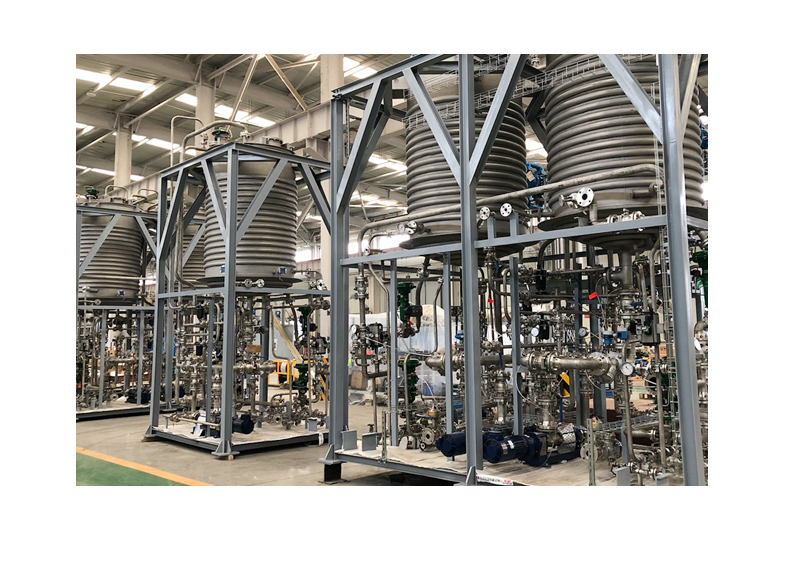
Blending System
In-line blending involves the continuous and controlled mixing of various components to create a finished product with closely defined quality. This method allows for real-time quality control during production, enabling blending, analysis, and loading in a single process. This is particularly valuable for continuous process industries.
On the other hand, in-tank blending entails sequentially introducing measured volumes of each component into a tank, followed by mixing, sampling, quality analysis, and potential adjustments to the blend. While this method is time-consuming and requires storage of pre-blended and finished products, it can still be a cost-effective option, especially for small volumes and specific applications.
Density or API gravity trim blenders are used for blending liquid hydrocarbons when the feedstock quality is inconsistent due to varying supply or product layering in tanks. These blenders are particularly suitable when the main parameter of importance in the final blended product is density.
In the case of an in-line density trim blender, the final product is produced based on a component ratio in the recipe. However, to continuously optimize the quality of the final product during the batch, a densitometer analyzer mounted at the exit to the blend header is used. This ensures that the density of the final product is maintained within the desired range throughout the blending process.
This method of in-line density monitoring and adjustment allows for greater precision and control over the blending process, resulting in a final product with consistent and accurate density characteristics


